Why Your Wooden Garden Planters Rot (And How to Stop It)
We’ve all been there. You spot a gorgeous wooden planter, pay good money for it, fill it with great soil, plant your favorite structural succulents or herbs, and set it on your stoep. It looks incredible.
Then, a single wet Garden Route winter hits. By spring, the wood has turned a dull grey, the panels are beginning to warp, the joints are splitting, and fuzzy wood fibers are rising from the surface. Before long, you realize the bottom is rotting out, and you have to discard the entire setup.
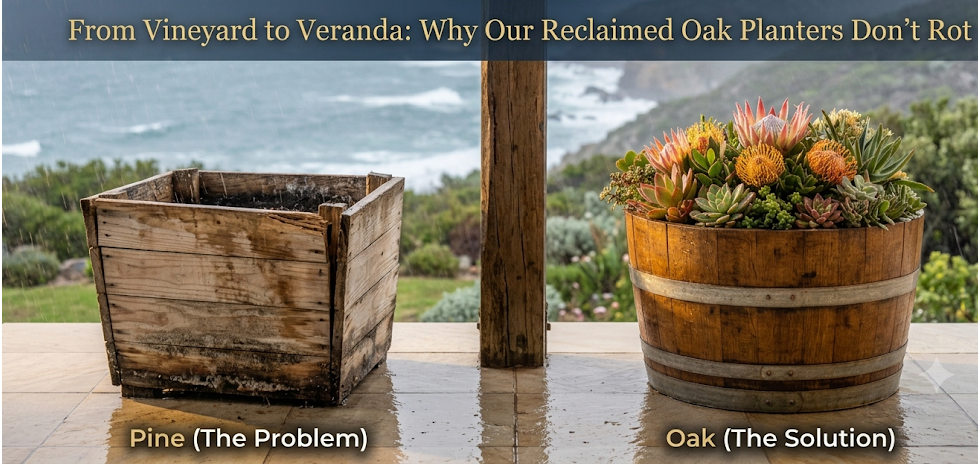
So, why does store-bought outdoor wooden furniture rot so quickly down here on the coast—and how do you invest in a setup that actually lasts a lifetime? The answer lies in the anatomy of the wood itself. Most mass-produced wooden planters sold in South Africa are made from young, fast-growing softwoods (typically untreated or poorly treated pine).
Softwoods have a loose, cellular structure. Under a microscope, pine acts like a dense sponge. When the heavy winter rains roll over Plettenberg Bay and Knysna, these open wood fibers drink in the moisture. The wood expands when wet, contracts when dried by the coastal sun, and quickly splits. This constant movement breaks down any surface paint or varnish, leaving the raw timber exposed to fungal spores that cause rot.
To survive the harsh coastal wind, intense UV rays, and relentless salt air of the Garden Route, you need dense, tight-grained hardwood. And there is no finer hardwood for outdoor survival than reclaimed French and American oak.
Our planters at Coastal Barrels don’t start their lives in a timber mill. They begin their journey in the heart of South African wine country. Before we ever touch them at our warehouse in The Crags, these tight-grained oak staves have spent years seasoned by liquid, alcohol, and immense atmospheric pressure inside dark wine, whiskey and brandy cellars.
This long process does two incredible things to the wood, natural compression and tannin saturation. The grain of French and American oak is incredibly tight to begin with, but years of holding wine under pressure seals the microscopic pores completely. The wood fibers absorb rich tannins from the wine. Tannins are nature’s built-in defense mechanism; they are naturally antimicrobial and highly resistant to decay and wood-boring insects.
When you compare a cheap pine planter to a reclaimed oak wine barrel, you are comparing a household sponge to a shield. Under heavy rain, water beads perfectly off the dense oak staves while spongy softwoods unevenly soak and warp.
If you want your patio or entrance planters to look pristine decade after decade, follow these three golden rules:
1. Elevate Off the Wet Ground
Wood rot loves standing water. If a planter sits flat on a wet stone veranda or deck, moisture gets trapped underneath, creating a breeding ground for fungus.
- The Fix: Ensure your planters have sturdy wooden legs or are slightly raised. Our Half-Planters with Legs are specifically designed to keep air flowing underneath, keeping both the deck and the planter dry.
2. Set Up a Flawless Drainage Layer
Never throw soil directly into a flat-bottomed container without proper drainage. If water pools at the bottom of the soil, it will rot your plant’s roots and slowly degrade the wood from the inside out.
- The Fix: Layer the bottom of your planter with coarse river stones, followed by a layer of horticultural charcoal and geotextile fabric before adding your organic potting soil.
3. Seal with Marine-Grade Protection
Raw oak is incredibly tough on its own, but a high-quality UV-resistant, water-repellent sealant acts as an extra barrier against the harsh Garden Route elements.
- The Fix: While we love the rustic charm of our Raw Oak Planters, we highly recommend our Varnished Range for high-exposure coastal verandas. We hand-sand the staves and apply a premium marine-grade coat that locks in the rich, warm wood grain and completely repels water.
Invest Once in Quality That Lasts
Stop spending money on flimsy plastic pots that crack in the sun or cheap pine planters that rot within a season. Invest in authentic, heavy-duty reclaimed oak that actually gets better with age.
You May Also Like
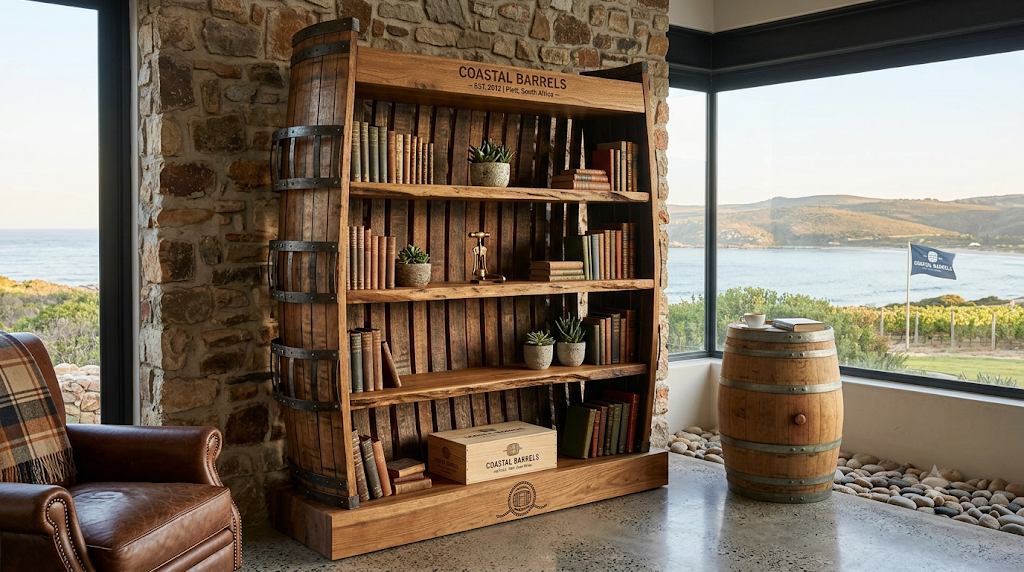
The Hoop & Plank Bookshelf: Industrial Design Meets Cellar Heritage
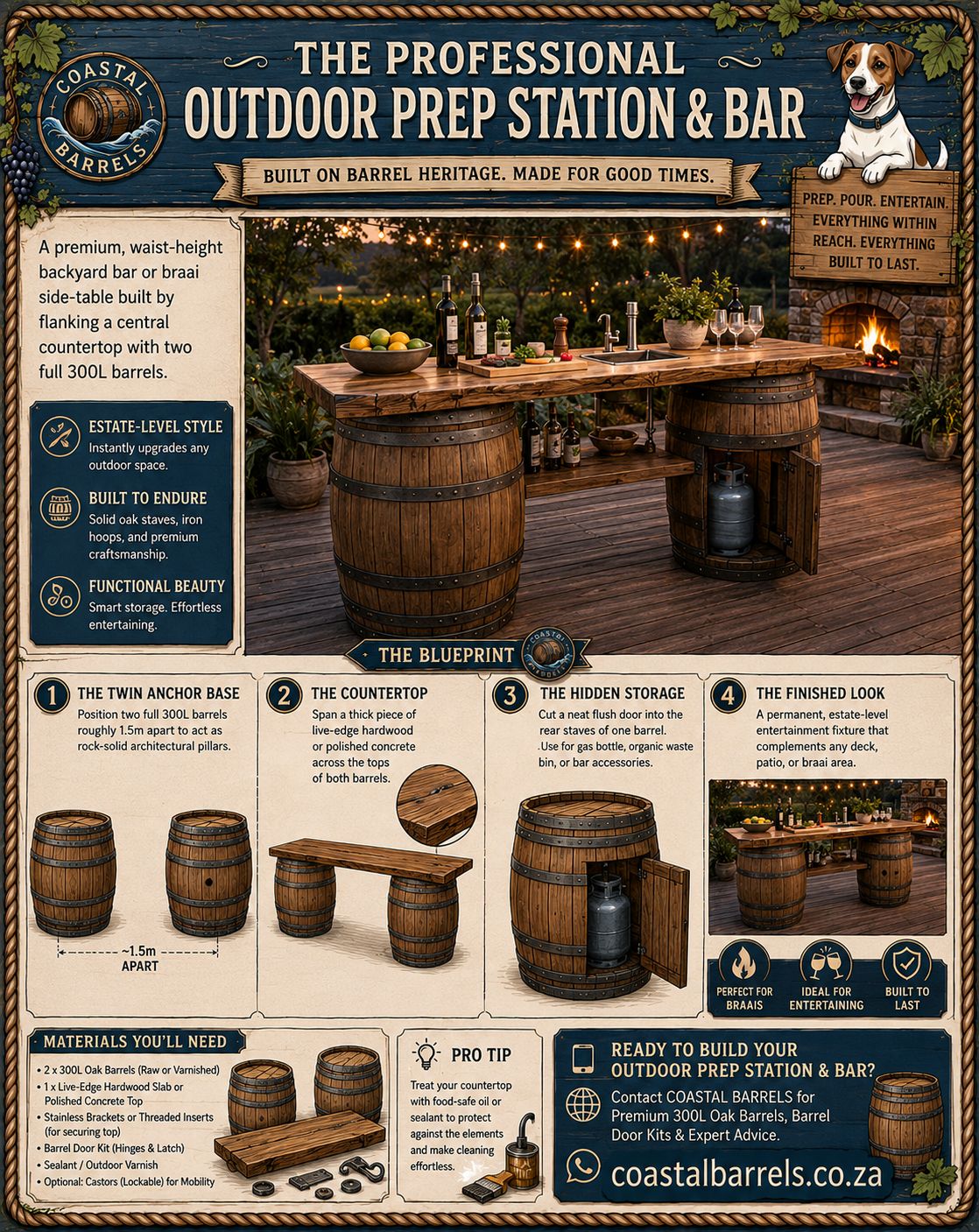
The Ultimate Backyard Bar: A DIY Guide to Building an Estate-Level Prep Station